A Seafloor Caught Mid-Moment
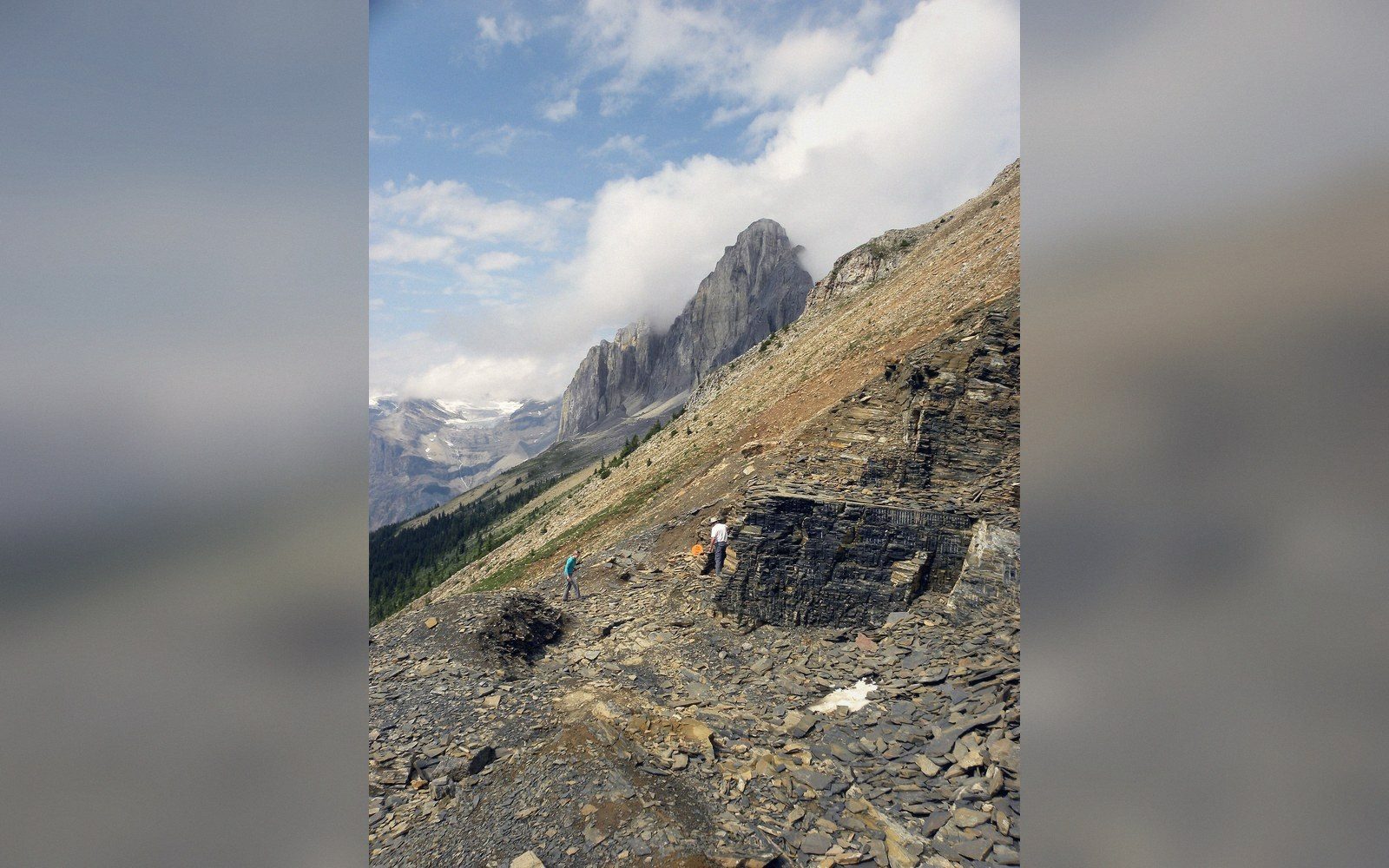
In the summer of 1909, Charles Doolittle Walcott, then secretary of the Smithsonian Institution, split open a slab of dark mudstone on a ridge in what is now Yoho National Park, British Columbia (approximately 51.4°N, 116.5°W), and found an animal unlike anything he had seen — intact, flattened but otherwise whole, its soft parts printed in the rock as clearly as a rubbing from a coin. He returned the following summer with picks, his family, and mules, and over the next several field seasons extracted tens of thousands of specimens from a layer he called the Phyllopod Bed, shipping them to Washington in wooden boxes. The site became known as the Burgess Shale, after the nearby mountain.
What Walcott had stumbled onto was a lagerstätte ↗ — a German term, used without translation in geology, meaning a deposit of exceptional preservation — from the middle Cambrian period, roughly 508 million years ago. The Cambrian is the geological interval, beginning about 539 million years ago, in which animals with complex body plans appear suddenly and prolifically in the fossil record; the Burgess Shale preserves a window into that explosion more clearly than almost any other deposit on Earth. Shells and hard parts make up perhaps fifteen percent of the fauna here. The rest — guts, gills, eyes, limbs — is soft tissue, which almost never survives.
Why the Bodies Are Still There
Preservation at this quality requires a specific and fortunate sequence of events. The reef that bordered an ancient sea in what is now the Rocky Mountains stood at the edge of a submarine cliff. Storms or internal slope failures periodically swept communities of animals off the seafloor and down the cliff face in density currents — fast-moving slurries of silt and water. The animals landed at the base of the cliff in deep, oxygen-depleted water. Without oxygen there is no bacterial decay of soft tissue, and no scavengers; the bodies were then buried quickly under more fine sediment, effectively laminated into the mud. The Geological Survey of Canada and subsequent researchers have refined this picture considerably since Walcott's day, but the essential mechanism — rapid burial in anoxic mud — remains the accepted explanation. The Royal Ontario Museum has conducted excavations at the Shale since the 1970s, and its collections, combined with Walcott's original material at the Smithsonian, form the basis of most analysis done since.
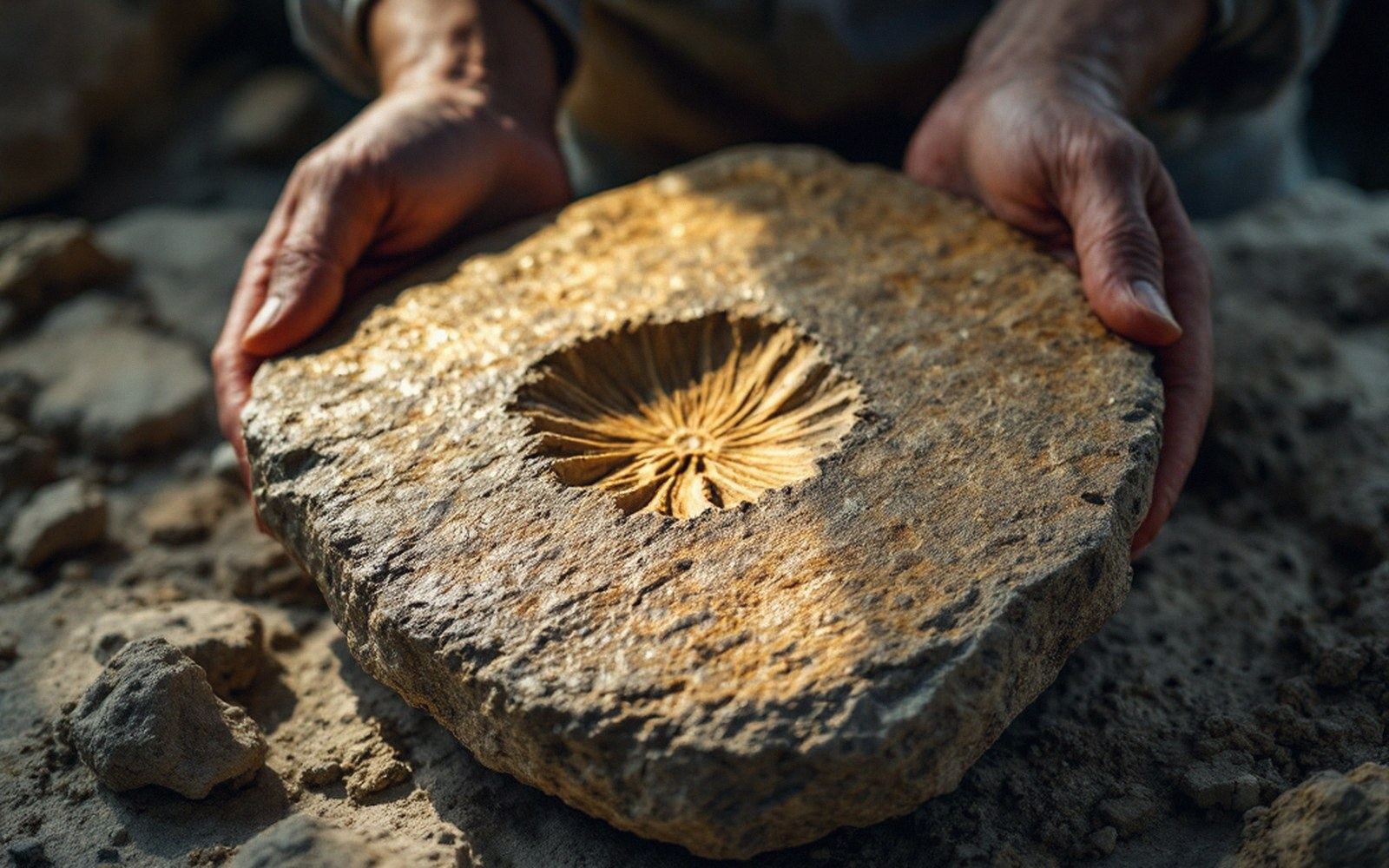
The preservation is not universal or even: some animals are rendered in extraordinary detail, every antenna and internal organ visible; others are smeared or incomplete. The slope is steep enough that the density current was violent, and some animals arrived already disarticulated. What survived is a biased sample — but a vastly richer sample than hard-part preservation alone would yield. Studies using synchrotron imaging and electron microscopy have in recent decades resolved structures inside the fossils that Walcott could not have seen with the tools of his era: gut contents, nervous tissue, the structure of eyes.
Key numbers
The Animals and What They Changed
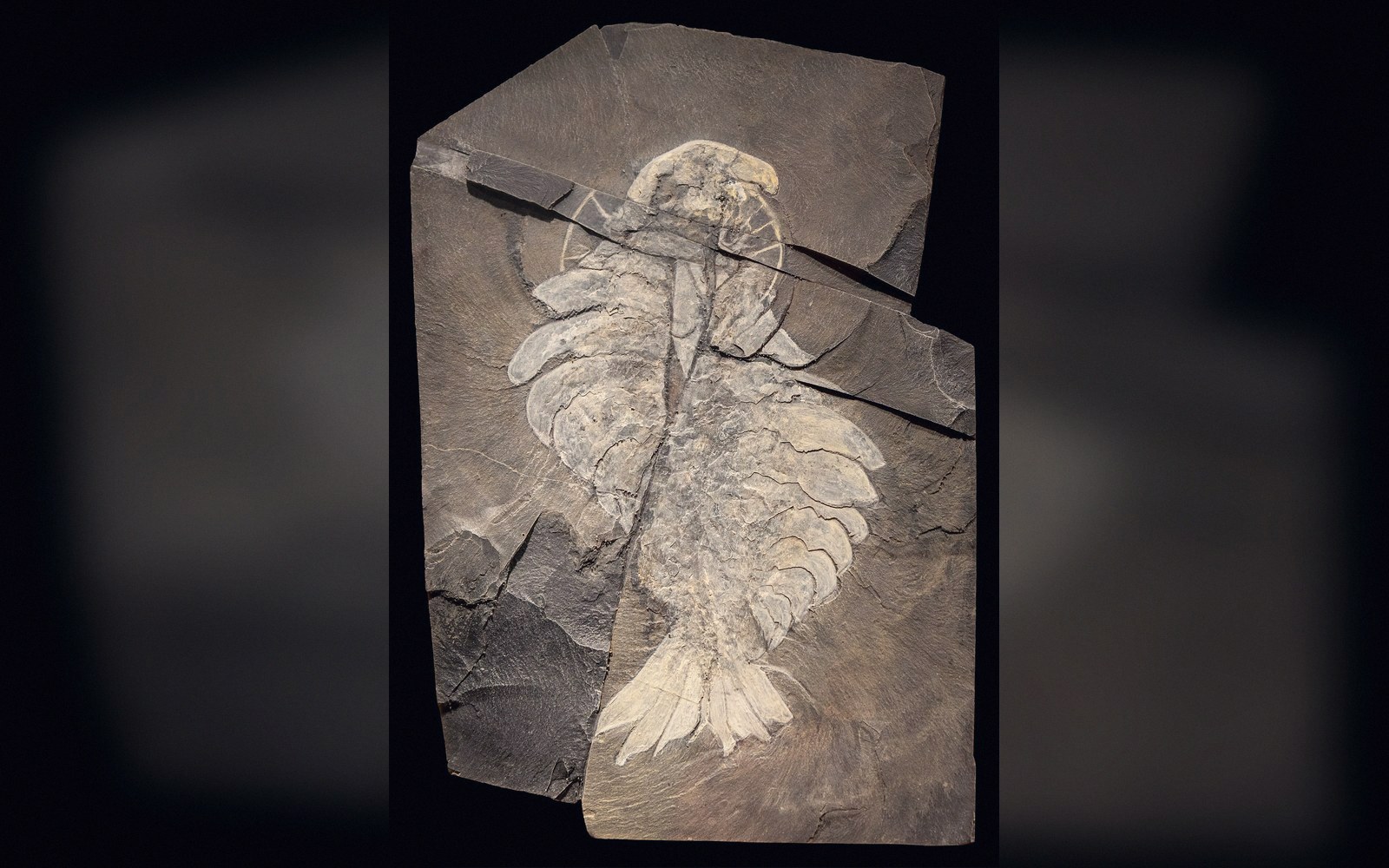
The fauna Walcott collected contained animals so morphologically unlike anything alive that early reconstructions assembled them incorrectly — pieces that belonged to a single creature were described as separate species. Anomalocaris, a predatory arthropod that reached perhaps half a metre in length, had its grasping frontal appendages first classified as a shrimp's body, and its circular mouth as a jellyfish. It took decades and many more specimens to put it together correctly. Opabinia, five-eyed and equipped with a grasping proboscis, caused outright laughter when it was first correctly reconstructed at a palaeontology conference in 1972, according to accounts of the meeting — the audience assumed a joke.
These animals matter not as curiosities but as evidence. The Cambrian explosion is the interval in which most animal body plans appear in the fossil record with startling speed — geologically speaking, within perhaps twenty to twenty-five million years. The Burgess fauna shows that this diversification included forms that have no modern descendants: body plans tried and abandoned, evolutionary experiments that ran for millions of years and then stopped. Wiwaxia was armoured with scales and spines and does not fit cleanly into any living phylum. Hallucigenia, a lobopodian, was reconstructed upside down for years because its paired spines seemed more plausibly legs than dorsal armaments.
Yet the Shale also shows continuity. Pikaia, a soft-bodied swimmer found by Walcott and initially classified as a polychaete worm, was later reinterpreted as an early chordate — possibly a distant relative of vertebrates, including the animals doing the interpreting. The uncertainty around Pikaia's precise position in the tree of life remains active in the literature, but its chord-like internal structure is real. The Burgess fauna contains the ancestors — or the close relatives of the ancestors — of the dominant animal groups today, alongside body plans that left no descendants at all. It is this combination that makes the deposit so analytically valuable: not a museum of freaks, but a snapshot of a moment when animal life was genuinely trying many different solutions to the problem of being an animal.
Beyond Walcott's Quarry
Walcott's Phyllopod Bed is now a protected site within Yoho National Park, and Parks Canada ↗ manages access; the site is a UNESCO World Heritage property, inscribed as part of the Canadian Rocky Mountain Parks designation. Collecting is prohibited, and the ridge is visited only in guided groups.
But the Burgess Shale is now understood as a formation, not merely a single quarry. Equivalent deposits — same age, same preservation quality, same fauna — have been found across a wide arc of British Columbia and into the Mackenzie Mountains of the Northwest Territories. In 2012, researchers announced a major new site on the slopes of Mount Stephen in Yoho, and the Kootenay National Park site on Marble Canyon, identified in 2012 and since extensively excavated by the Royal Ontario Museum, has produced thousands of specimens including several species new to science. The formation extends laterally across what was once the margin of the Laurentian continent, meaning the seafloor community it preserves was not a local accident but a widespread ecosystem.
How the bodies were kept
Drawn, not photographedThis matters because it removes some of the sampling anxiety around Walcott's original quarry: if the fauna is consistent across hundreds of kilometres, then what Walcott found is genuinely representative, not a statistically peculiar pocket. The Burgess Shale fauna is, as far as can be determined, an actual snapshot of a Cambrian seafloor — mudslide-caught, oxygen-excluded, buried fast, and now split open on a ridge in the Rockies for anyone willing to read the stone.
Chronology of understanding
In order- 1909Walcott splits the first slab; returns over subsequent seasons
- 1970sRoyal Ontario Museum begins independent excavations
- 1972Opabinia correctly reconstructed; conference reaction documented in scientific accounts
- 2012Marble Canyon site (Kootenay National Park) identified; new species recovered
- Ongoingsynchrotron and electron microscopy imaging resolves gut contents and neural structures inside specimens