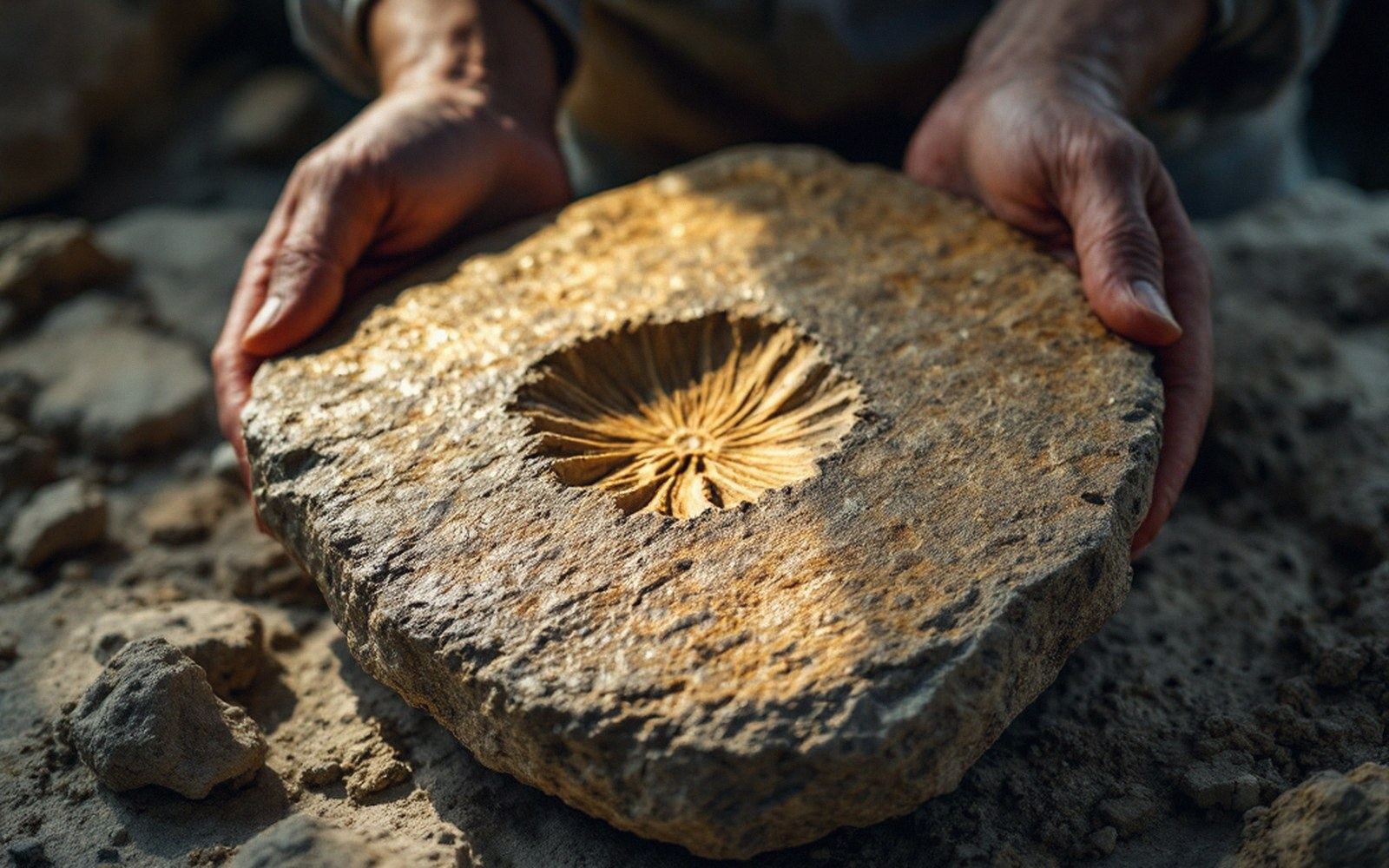
The narrow window between death and permanence
An animal dies. Within hours, bacteria begin dismantling it from the inside out — gut flora first, then everything else. Oxygen accelerates the process; scavengers accelerate it further. Under normal conditions, the soft parts — muscle, gut, skin, gill filaments — disappear within days or weeks. Bone and shell resist because they are already mineralised. Everything else is almost always gone.
Preservation of soft tissue requires two things to happen fast and together: burial deep enough to exclude scavengers, and exclusion of the oxygen that fuels microbial decay. Fine-grained sediment — volcanic ash, clay, anoxic (oxygen-depleted) mud — does both. It fills body cavities before they collapse, isolates the carcass from the water column, and creates chemical conditions in which certain minerals begin to replace organic structures molecule by molecule before those structures dissolve.
The replacement is not instantaneous. In the right chemical environment, iron sulphide or calcium phosphate can infiltrate soft tissue while it still retains its three-dimensional shape. The original material is gone, but the structure survives as a cast faithful enough to show musculature, gut contents, even individual cells. The fossil record's rarest entries come from moments when burial was not just rapid but perfect — a mud slide, a sudden ash fall, a seafloor where bottom waters carried no oxygen at all.
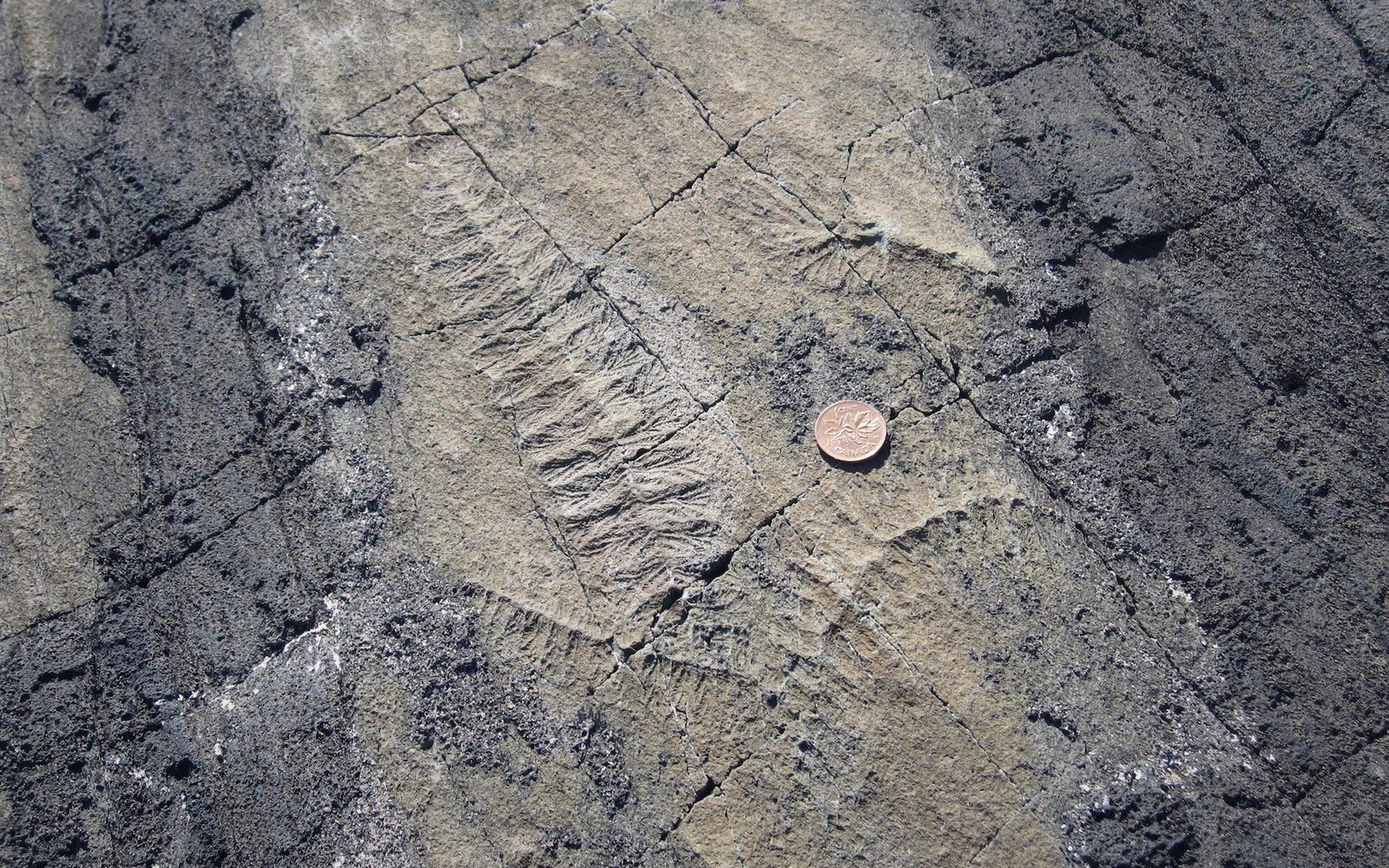
Canada holds two of the world's most important examples. The Burgess Shale in Yoho National Park (51.4°N, 116.5°W) preserves mid-Cambrian animals — roughly 508 million years old — that were swept off a reef edge and buried in fine anoxic mud at the foot of a submarine cliff. Decay was arrested before the bodies lost their form, which is why Anomalocaris is known with its eyes and grasping appendages intact. At Mistaken Point in Newfoundland (46.6°N, 53.2°W), Ediacaran organisms between roughly 560 and 575 million years old were buried beneath a fall of volcanic ash on an anoxic seafloor. Both sites are UNESCO World Heritage ↗ properties, in part because their depositional conditions were unusual enough to be scientifically irreplaceable.
Key conditions for soft-tissue preservation
Terms- Rapid burialsediment covers the carcass before scavengers reach it or the body wall fails
- Anoxic environmentabsence of oxygen suppresses the aerobic bacteria that drive rapid decay
- Fine grain sizeclay or ash fills cavities and captures surface detail
- Mineral replacementiron sulphide or calcium phosphate infiltrates tissue before it dissolves
These deposits are called Lagerstätten (German, roughly "motherlode sites") — places where the preservational conditions were so exceptional that the fossil record briefly matches biological reality rather than its mineralised shadow. They are rare because the window between death and permanent burial is narrow, and everything has to go wrong for the animal and right for the sediment at exactly the same moment.
How the bodies were kept
Drawn, not photographed